
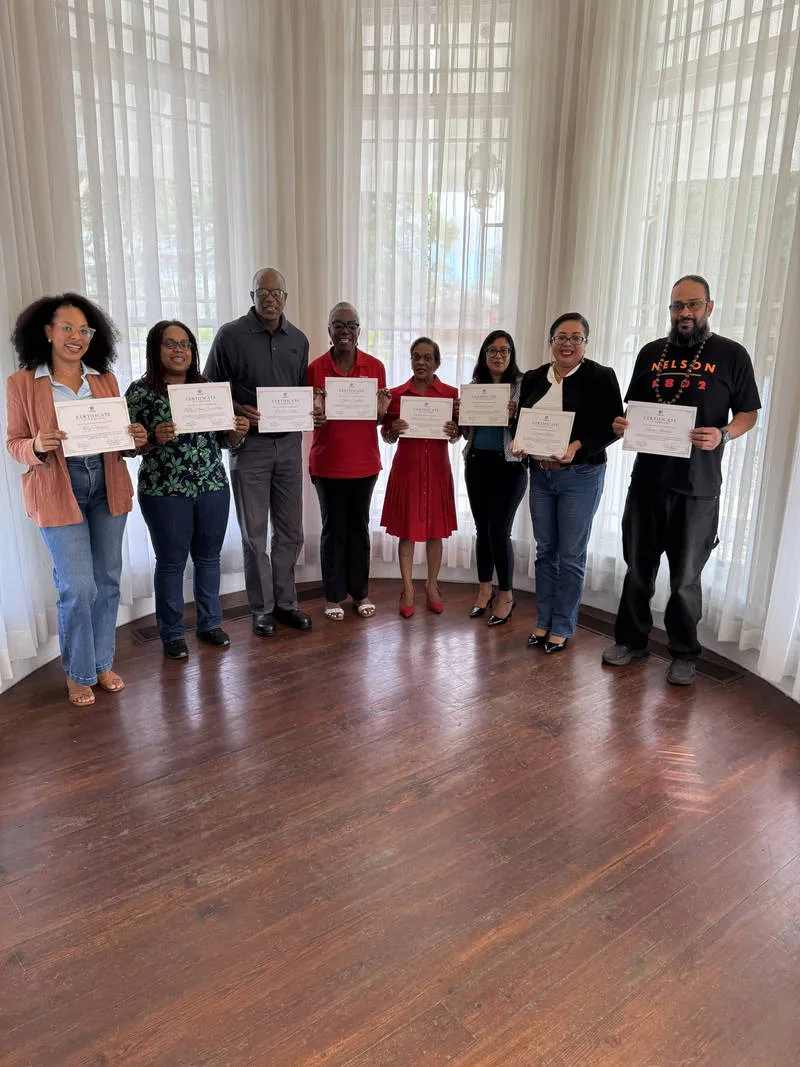
(From Left to Right) Tiy Hackett (Social Media, Marketing and Outreach Officer at the National Trust of Trinidad and Tobago), Kelly Ann Carabon (Civil Engineer at the National Trust of Trinidad and Tobago), Dexter Sealy (Chairman of Building and Lands at the Holy Trinity Cathedral) Annie Douglas (representative for Hayes Court), Marianna Gervais (Principal of Todd’s Road RC School), Donna Mora (CEO of the Lopinot Tourism Association) and Sean Austin (Facilities Technician from the National Trust of Trinidad and Tobago)
Port of Spain, Trinidad and Tobago —
Heritage is often spoken of in terms of buildings, landscapes, and artefacts. But as the National Trust of Trinidad and Tobago reaffirmed during the Legacy Leaders Training Programme, heritage ultimately survives because of people — individuals who dedicate their time, resources, and livelihoods to protecting what matters.
Held on January 15 and 16 by the Trust’s Education and Outreach Committee (EOC), the inaugural programme brought together heritage site owners and operators who have chosen to make preservation not just a responsibility, but a way of life.
Opening the programme, National Trust CEO Graeme Suite reflected on the quiet determination required to sustain heritage spaces in today’s environment, noting that many practitioners commit themselves to this work with limited recognition and significant personal sacrifice.
Heritage, Suite observed, is not sustained by passion alone. It demands resilience, long-term vision, and the ability to balance cultural responsibility with economic reality — often over decades, and often against considerable odds.
People Behind the Places
Participants represented a diverse cross-section of nationally significant heritage sites, including Hayes Court, the Shrine at Our Lady of Montserrat Roman Catholic Church, Holy Trinity Cathedral, Asa Wright Nature Centre, Lopinot Historic Complex, Todd’s Road Roman Catholic School, Mille Fleurs Heritage House, Banwari Trace, and Nelson Island.
Throughout the programme, candid discussions revealed the human realities behind heritage stewardship. One participant described their role as being “chief, cook, and bottle washer” — managing interpretation, maintenance, administration, fundraising, and community engagement often with minimal staff or resources.
Others highlighted concerns around succession planning, questioning who will carry this work forward and how younger generations can be meaningfully engaged in heritage spaces so that stewardship does not end with the current custodians.
Many participants expressed a strong desire to attract younger audiences, recognising that repeated, positive exposure to heritage sites is critical to fostering long-term appreciation, respect, and a sense of shared ownership.
Building Skills for Sustainability
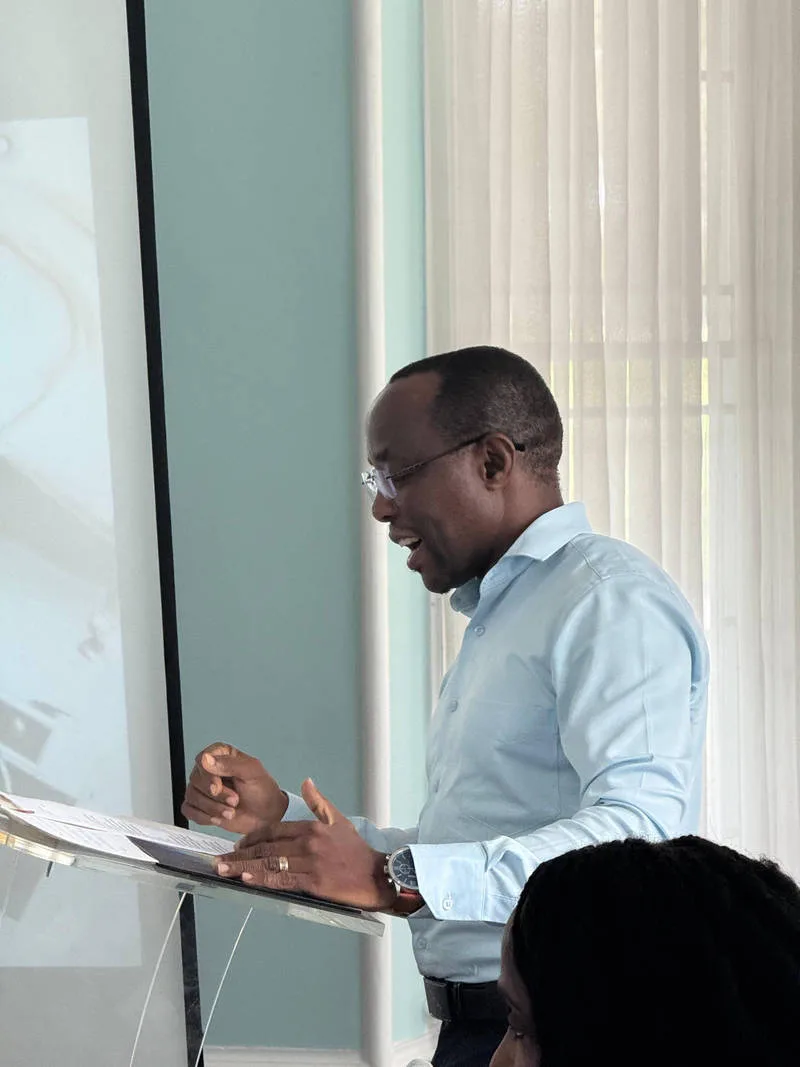
Marlon Green, Senior Education and Outreach Officer at the National Trust of Trinidad and Tobago Facilitates a session on Developing the Heritage Tourism Product
The programme was designed to meet practitioners where they are, equipping them with practical tools and shared knowledge to support sustainable management within a growing Heritage Tourism Economy.
Through facilitated discussions and expert-led sessions, participants explored:
- Site Interpretation — Joseph Bertrand
- Heritage Tourism Product Development — Marlon Green
- Education, Outreach, and Youth Engagement — Joseph Bertrand
- Visitor Experience and Respectful Behaviour — Joseph Bertrand
- Documentation and Archiving
- Marketing and Communication Strategies — Tiy Hackett
- Staff Recruitment, Training, and Retention — Pauline Phillip
In a session on visitor experience, Joseph Bertrand emphasised the importance of facilitating respectful behaviour by guiding rather than guarding, encouraging heritage practitioners to move beyond enforcement and instead foster understanding, connection, and a sense of shared responsibility. Central to this approach was the idea that repeated exposure to heritage spaces builds familiarity, pride, and ownership over time.
The programme intentionally fostered peer-to-peer exchange, creating a safe and supportive environment for participants to share challenges, strategies, and lived experiences of heritage stewardship.
Unlocking Financial Pathways for Preservation
Significant interest was generated during a session led by Ashleigh Morris, Senior Heritage Preservation and Research Officer, on the Heritage Tax Allowance Programme (HTAP).
The HTAP is a strategic fiscal incentive led by the Government of Trinidad and Tobago in collaboration with the National Trust. It offers a 150% tax allowance — up to one million dollars annually — to companies investing in the preservation of tangible heritage assets.
Through the programme, heritage property owners and occupiers gain access to much-needed private sector support for restoration, maintenance, and adaptive reuse projects that may otherwise be financially out of reach. At the same time, participating companies are offered a meaningful opportunity to invest in national heritage while advancing their environmental, social, and governance (ESG) commitments and corporate social responsibility (CSR) strategies.
An Investment in People, Not Just Places

Joseph Betrand, Education and Outreach Officer from the National Trust of Trinidad and Tobago and Donna Mora, CEO from the Lopinot Tourism Association
Special commendation was extended to Education and Outreach Officer Joseph Bertrand, who conceived the Legacy Leaders initiative and project-managed its successful implementation.
The Legacy Leaders Training Programme represents a deliberate shift toward investing in the human infrastructure of heritage preservation — recognising that sustainable heritage management depends as much on leadership, collaboration, succession planning, and community connection as it does on conservation techniques.
As the National Trust of Trinidad and Tobago continues its work to protect and promote the nation’s cultural and natural heritage, programmes like Legacy Leaders reaffirm a central truth:
When we invest in people, we protect legacy.
Members of the public are encouraged to support this work by becoming members of the National Trust of Trinidad and Tobago and actively participating in the preservation of our shared heritage.

Diane Bertrand, Coordinator of the Education, Outreach and Communications Department at The National Trust of Trinidad and Tobago presents Dexter Sealy, (Chairman of Building and Lands at the Holy Trinity Cathedral) with a token from the National Trust.