
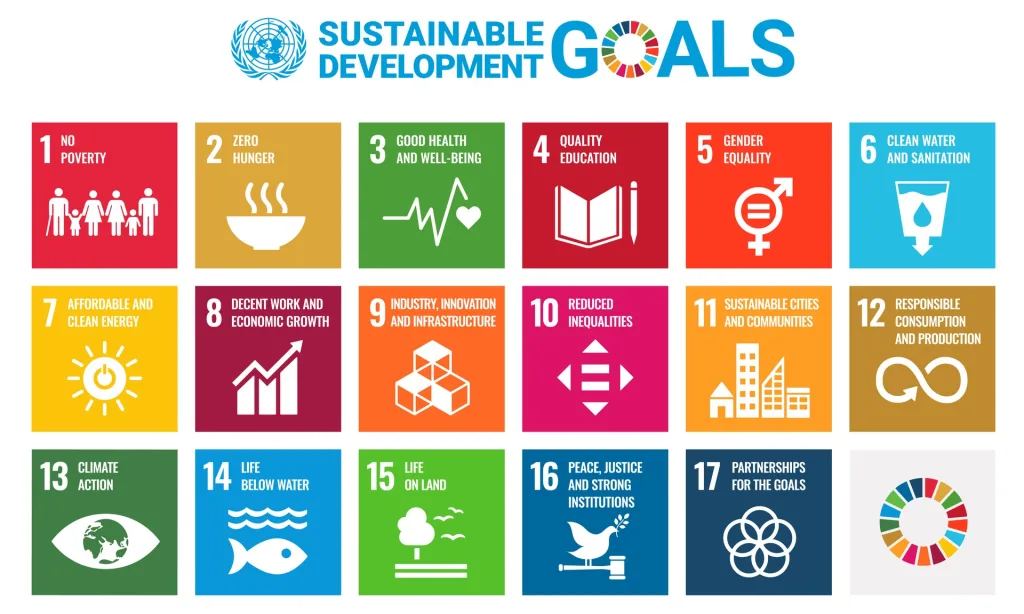
World Environment Day was designated by United Nations General Assembly, on the 5th of June 1972 at the Stockholm Conference on the Human Environment. It was first observed in 1973 under the slogan “Only One Earth.” World Environment Day is one of the largest platforms for encouraging environmental outreach, raising awareness, inspiring change and driving global action for a healthier and more sustainable planet. It is often used as an indicator of the progress made towards the environmental components of the Sustainable Development Goals. (SDGs). Over 150 countries participate each year and this includes various NGOs, communities, corporations, government agencies and even celebrities. These groups often engage in activities that promote global environmental awareness and action, including; public campaigns, educational programmes, clean-up initiatives, tree planting, policy advocacy and sustainability projects.
World Environment Day 2026 will be hosted in Baku, Azerbaijan with the focus being on Climate Action. This campaign aims to emphasise the need for an improved response to environmental changes due to climate change, such as rising temperatures, increases in sea levels, and extreme weather events as well as the degradation of ecosystems. The campaign seeks to reduce carbon emissions, strengthen environmental stewardship and build a resilient society where there is a balance within the human-nature relationship. World Environment Day 2026 seeks to inspire collective responsibility and encourage meaningful action to safeguard the planet for present and future generations.
According to the United Nations, “Climate change refers to long-term shifts in temperature and weather patterns.” While climate change occurs naturally, the term is typically used to refer to the rapid warming of the earth and the related environmental changes exacerbated by human activities. One of the major causes of climate change is an increase in greenhouse gases (carbon dioxide (CO₂), methane (CH₄), nitrous oxide (N₂O) and fluorinated gases). These can be produced from the burning of fossil fuels, deforestation, agriculture and industrial activities.
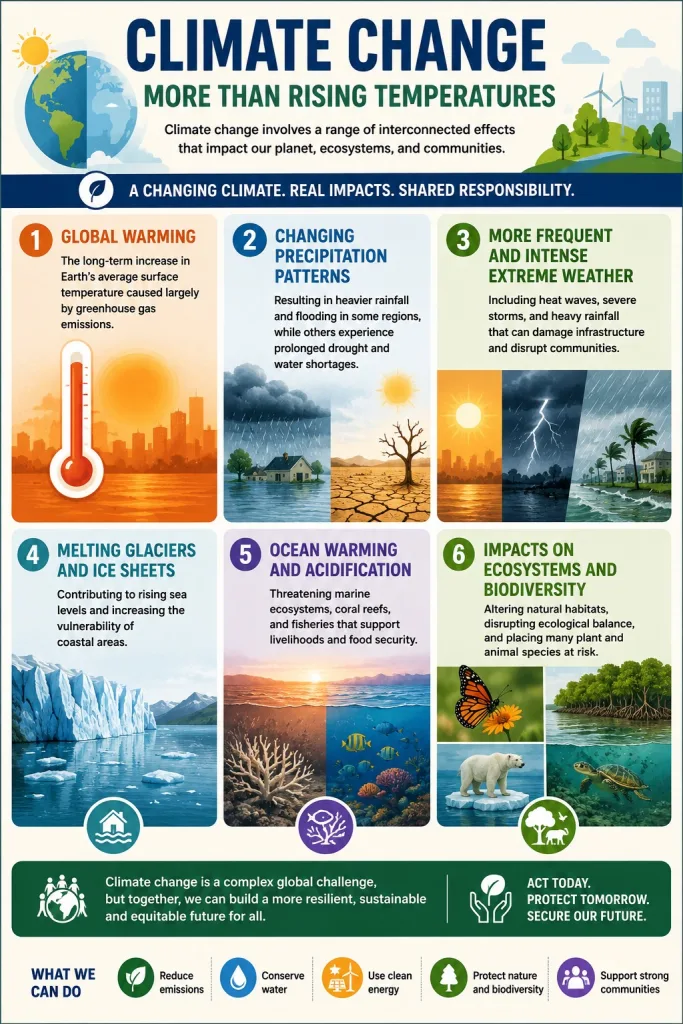
Climate Change can have detrimental effects on the environment, such as global warming, change in weather patterns, change in precipitation patterns, sea level rise, ocean warming and acidification, and environmental degradation thereby negatively impacting biodiversity.
So, you might be asking yourself, what does climate change have to do with heritage? According to UNESCO, “Heritage is our legacy from the past, what we live with today, and what we pass on to future generations. Our cultural and natural heritage are both irreplaceable sources of life and inspiration.” Note that heritage is extended beyond just natural and cultural, they can be mixed (natural and cultural), landscapes and intangible cultural heritage. Our present actions can influence the legacies that we hope to preserve and leave behind for the future generations. Heritage is something worth conserving and protecting and can be influenced by climate change. Our natural heritage can suffer irreversible consequences as a result of climate change. Heritage structures such as buildings and monuments are also susceptible to the impacts of the everchanging climate. The changing elements and weather conditions have the potential to destroy heritage sites, which ultimately leads to heritage loss or damage. One such example is the ongoing bleaching of our coral reefs due to the warming of the ocean. In 2024 the Institute of Marine Affairs (IMA) reported on a Level 5 Bleaching Alert, in response to a marine heatwave, highlighting that potentially over 80% of corals could be affected (IMA, 2024). Areas such as Mt. Irving, Castara, Colloden Reefs and Buccoo Reef were all impacted by the rise in ocean temperatures.

In 2021, the United Nations Educational, Scientific and Cultural Organisation’s (UNESCO) World Heritage Convention released their findings that “One in three natural sites and one in six cultural heritage sites are currently threatened by climate change.” The National Trust of Trinidad and Tobago (NTT&T) lists 59 Properties of Interest. These are defined as any monument, fossil, place, or site of natural beauty of national, historical, scientific or archaeological interest, whether above or below the surface of the land or the floor of the sea. The National Trust of Trinidad and Tobago collaborated with the University of Florida Historic Preservation Program and The Craig Group Partners, LLC. on Resilient Heritage: Trinidad and Tobago: an initiative aimed at advancing the resilience and long-term preservation of the nation’s historic places and cultural resources as they are impacted by climate change and sea level rise. The project included documenting two highly visible and visited heritage areas – Downtown Port of Spain and Nelson Island – with the aim of creating a model which could be replicated to strengthen the resilience of historic sites and resources across Trinidad and Tobago and the Caribbean region.
The Resilient Heritage: Trinidad and Tobago report highlights how climate change and environmental degradation threatens both natural and cultural heritage across the country. Through digital documentation, flood simulations, community engagement, and vulnerability assessments, the project examined risks to sites such as Downtown Port of Spain and Nelson Island from sea-level rise, flooding, erosion, and outdated infrastructure. The report stresses that Trinidad and Tobago’s coastal dependence, combined with rising temperatures, changing rainfall patterns, and increasing storm impacts, places communities, infrastructure, and heritage resources at significant risk. It also emphasises the importance of integrating environmental management, public education, nature-based solutions, and heritage preservation into climate resilience planning.
The project is strongly related to World Environment Day 2026 because it demonstrated that environmental protection and heritage preservation are inseparable. World Environment Day promotes awareness and action to address environmental challenges, and this report showed how climate change, flooding, and poor land-use practices directly threaten the landscapes, ecosystems, and historic places that shape Trinidad and Tobago’s identity. The report highlights that healthy natural systems such as wetlands can reduce flooding and strengthen resilience, while public education and community involvement are essential for long-term environmental stewardship. By encouraging sustainable planning, climate adaptation, and the protection of both natural and cultural resources, the Resilient Heritage T&T initiative reflected the core message of World Environment Day: safeguarding the environment today is essential for protecting communities, culture, and future generations.
What can you do?
Here are some things you can do to make a small contribution to combating climate change.
Individual Actions
- Reduce your carbon footprint by choosing sustainable transportation, conserving energy, and reducing waste.
- Plant and protect trees to help absorb carbon dioxide and support biodiversity.
- Reduce, reuse, and recycle to minimize pollution and conserve resources.
- Conserve water through mindful consumption and water-saving practices.
- Choose sustainable products and support environmentally responsible businesses.
Community Actions
- Join a community clean-up to remove litter from beaches, rivers, parks, and neighbourhoods.
- Protect local ecosystems such as wetlands, forests, and mangroves that help communities adapt to climate change.
- Support environmental education by sharing knowledge about climate change and sustainability.
- Participate in citizen science projects that monitor environmental changes and biodiversity.
- Advocate for greener communities through tree planting, sustainable urban planning, and renewable energy initiatives.